
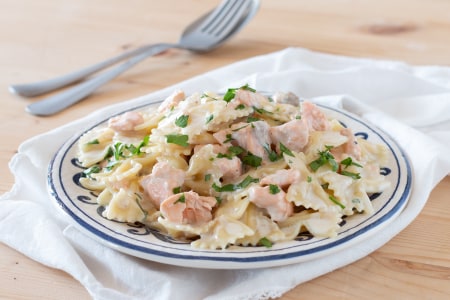
Fresh Salmon Farfalle
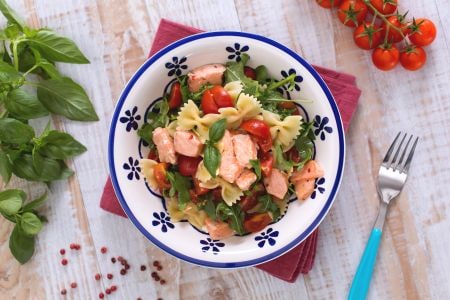
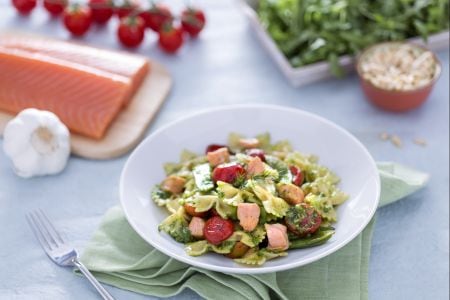
Fresh Salmon Farfalle: a very simple, delicious and creamy first course. Discover the doses and how to make it with our step-by-step…
- Very easy
- 25 min
- Kcal 552
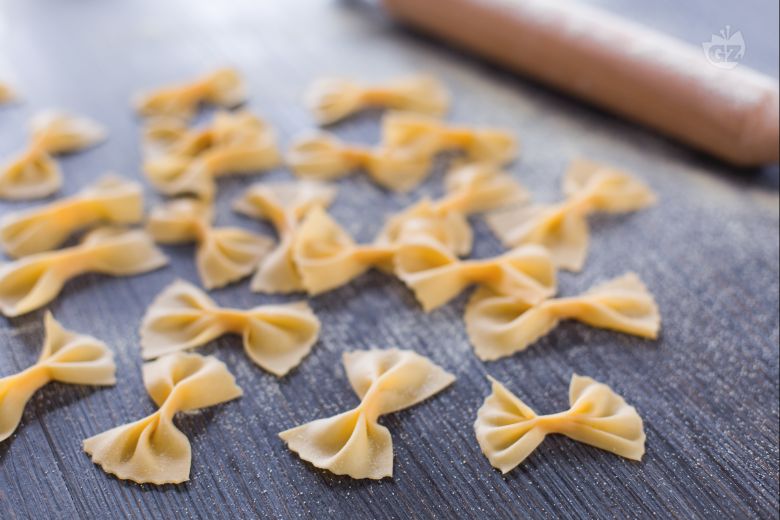
Fresh pasta farfalle comes from Northern Italy, and you know, people really love these little bow-tie shapes. Kids find them fun, and adults—well, they just appreciate how the tender pasta holds onto sauces. And honestly, the charm of fresh pasta farfalle is that it starts simple—flour and eggs coming together—but then you get to form each piece by hand. Really fun project. It might take a bit to master those fiocchetto shapes, but once you get it, making your own farfalle is a blast, especially if you're into trying out new pasta cooking techniques. Folks in Emilia-Romagna or Lombardy? They know what's up. Fresh shapes like farfalle, maccheroni and strozzapreti really show off the range of Italian pasta shapes, but farfalle stands out with its unique look and slightly chewy bite.
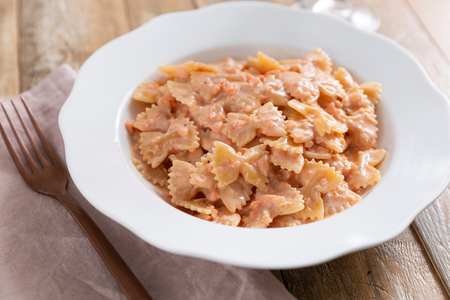
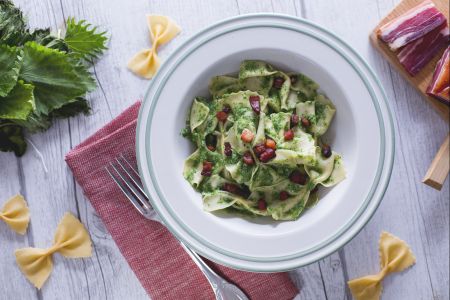
Rolling out the dough and pinching the center into those neat bows gives you this cool sense of connection with tradition. Plus, a little mess on the counter makes it even more fun. Experimenting with sauces is where the homemade farfalle recipe really, really shines. Some stick with tomato sauce for a simple, tangy finish, while others in Northern Italy choose a creamy, nutty nettle pesto. So so good. Trying farfalle from scratch lets you play with flavors and textures—think fresh peas in spring or a buttery sage sauce in the fall.
What’s cool is that making farfalle at home isn’t just about the shape; it’s about letting your favorite flavors soak into the soft, freshly cooked pasta. Even if the bows aren’t perfect at first, they’ll taste great. No question. Compared to other hand-shaped pasta, farfalle feels a bit more festive, and it always gets smiles at the table. Seriously. Learning how to make farfalle pasta is a bit like learning to tie your shoes—once you get it, you'll wonder why you waited so long. So, grab some flour, crack a few eggs, and see where your next batch of fresh bowtie pasta takes you. It'll be great.
You might also like:
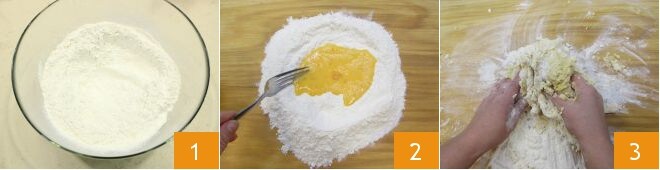
To make the farfalle, start by weighing the flour, then pour it onto the work surface (hold back a little of the flour, adding it while you work if the dough is too soft) 1, make a well in the center and pour in the eggs; start mixing with a fork gradually incorporating the flour around 2, then continue by hand and knead the dough until you obtain a smooth and elastic consistency.
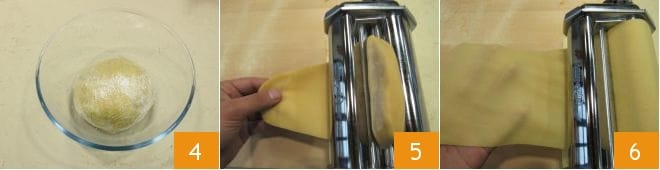
Shape the dough into a ball and wrap it in plastic wrap 4; let the fresh pasta rest for at least 20 minutes. Then take the dough again and divide it into quarters. Roll out the first piece (you can leave the others wrapped in plastic wrap until you roll them out) and put it in the pasta machine 5, you should work it from the thickest setting to the second to last, passing the pasta through the latter several times until you get sheets with a thickness of 1 mm, so really very thin 6.
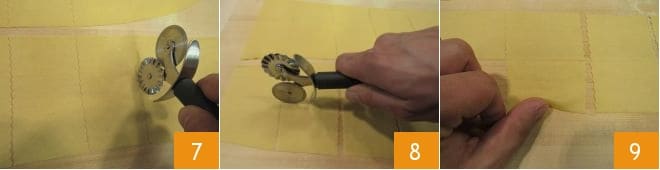
On the sheets you will get, pass a pasta cutter to make rectangles, like this: create vertical strips 3 inches wide with the scalloped side 7, then cut horizontally with the smooth side, to form sides of 1.5 inches 8. To form the farfalle, you'll need to use your thumb and index finger: with your thumb, lift one edge of the dough at the center of the rectangle 9
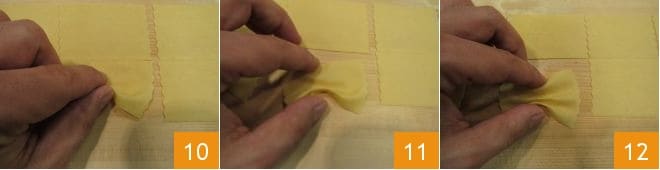
another fold will also be created in the center 10, while with your index finger, bring the opposite edge also towards the center to create the other fold (11-12).
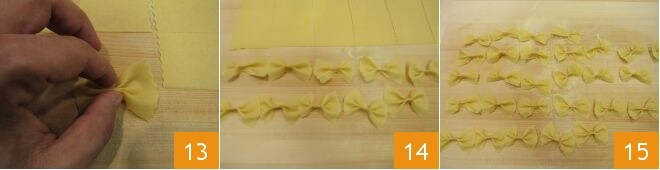
Then pinch in the center 13 to fix the shape of the farfalle 14; continue with all the dough. As you go, you can place them on a tray and finish the fresh pasta. As you make the farfalle, you can lay them on a slightly floured tray, perhaps with semolina flour if you prefer so that it is not absorbed by the fresh pasta 15, then let them dry for about 30 minutes. Your farfalle will cook in 5 minutes in boiling salted water to taste!