Red Bell Pepper and Robiola Risotto

- Difficulty: Easy
- Prep time: 15 min
- Cook time: 35 min
- Serving: 4
- Cost: Low
PRESENTATION

Risotto with red pepper and robiola is one of those amazing treats from Northern Italy, where they really really know how to do creamy rice dishes. I mean, it’s both light and rich—perfect combo, right? The star here is the summer bell pepper, roasted till it’s sweet and blended into this bright, velvety sauce. And here's the thing, it’s not your everyday risotto. It’s got this pop of color and taste that stands out at any table. In places like Lombardy and Piedmont, they keep it simple—and delicious. This dish uses local peppers and the creamy, slightly tangy robiola cheese. While most risottos end with butter or Parmesan, the trick here is ‘mantecatura’ with robiola. It gives a moist, creamy finish that just melts in your mouth. Really good stuff. Each spoonful is filled with the tender bite of high-quality Italian rice mixed with the rich, unique flavor of red pepper sauce. It's perfect for a light summer dinner or a super impressive first course.
Roasted peppers and robiola come together in this red pepper risotto to create a dish all about balance. You get the natural sweetness from the peppers, while the robiola adds a mild, almost creamy tang. And listen, it keeps it from being too heavy. In Northern Italy, cooks use this robiola risotto technique to make risotto feel fancy—without any fuss. And it's perfect for when you want something fresh but comforting. Flavors blend beautifully—no blandness here. Seriously good. It’s an easy risotto with robiola that doesn’t need a lot of extra ingredients—just some patience with the rice and really good cheese. This dish totally shines as a vegetarian risotto idea when you want something special with no hassle. Serve it on its own or with a simple salad, and you’ve got a meal that’s golden, a bit elegant, and a perfect showcase of what summer in Northern Italy tastes like. And the harmony of flavors and textures makes it a standout. For sure.
You might also like:
- INGREDIENTS
- Red peppers 4.3 cups (650 g)
- Robiola cheese 7.1 oz (200 g)
- Carnaroli rice 1.7 cups (320 g)
- Onions 0.3 cup (40 g) - About 1/4 cup (chopped)
- Thyme to taste
- Rice vinegar 2 spoonfuls
- Extra virgin olive oil to taste
- Fine salt to taste
How to prepare Red Bell Pepper and Robiola Risotto
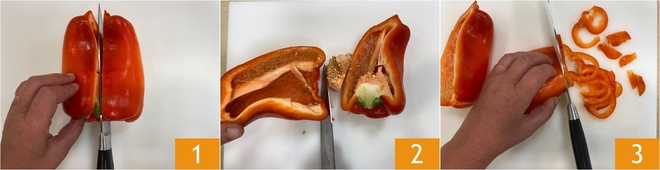
To prepare the red bell pepper and robiola risotto, clean the peppers and cut them in half 1, remove the stem, seeds and internal membranes 2, then cut them into strips 3.
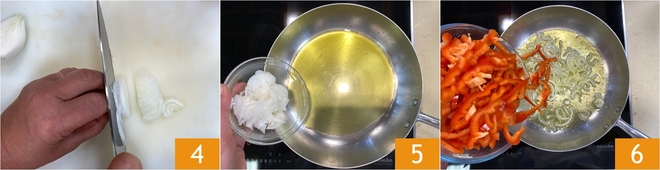
Trim and thinly slice the onion 4. In a pan pour a drizzle of extra virgin olive oil (about 1 tbsp), add the onion 5 and sweat it over low heat. Add the peppers 6.
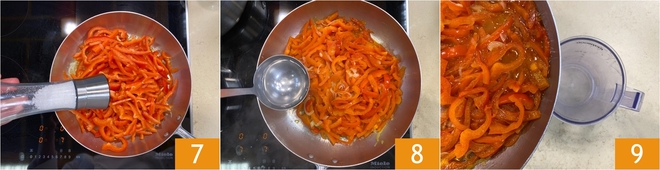
Season with salt 7 and cook with a ladle of hot water (about 1/2 cup / 4 fl oz) 8 until they are soft, well browned and fully wilted; this will take about 15 minutes. When cooked, transfer them to the tall blender jug 9.
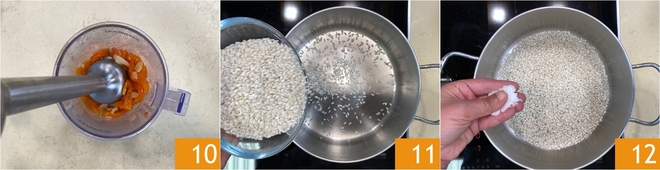
Blend them with an immersion blender 10 until you obtain a smooth, homogeneous cream and set it aside. In a saucepan pour the rice 11, season and dry-toast the rice for a couple of minutes 12.
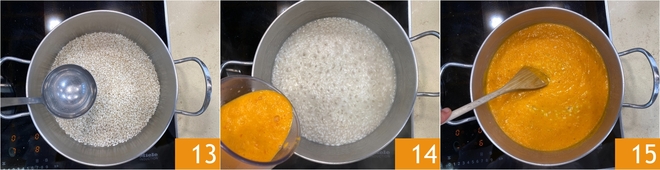
Cook, moistening the rice with a ladle of hot water at a time (about 1/2 cup / 4 fl oz) 13, stirring as needed. Add the bell pepper cream to the rice after 10 minutes 14 and continue cooking 15, adding the hot water little by little. The rice cooks in about 18 minutes in total.
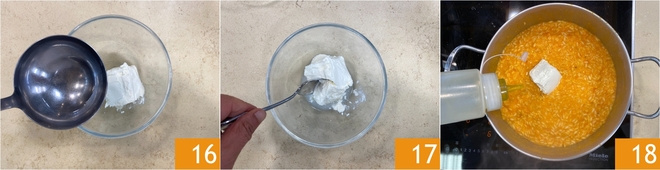
Smooth half of the amount of robiola with a ladle of hot water (about 1/2 cup / 4 fl oz) 16 17; you should obtain a smooth cream that will be used to garnish the plates. With the heat off, finish the risotto with a drizzle of oil (about 1 tbsp) and the remaining robiola 18.
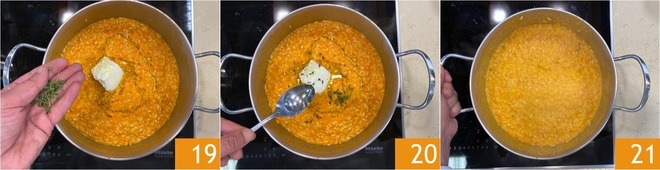
Flavor with a few fresh thyme leaves 19 and rice vinegar 20. Mix vigorously until you obtain a creamy, well-emulsified risotto 21.
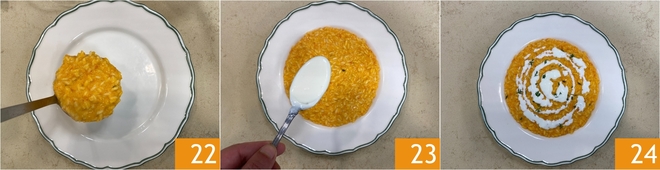
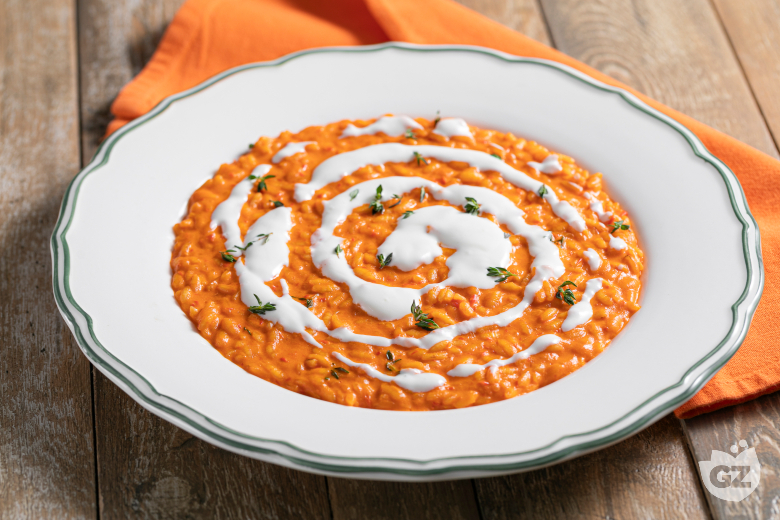
Plate the red bell pepper and robiola risotto 22 and finish with the robiola cream 23 and a few fresh thyme leaves 24.